Season Extension & Supply Chain
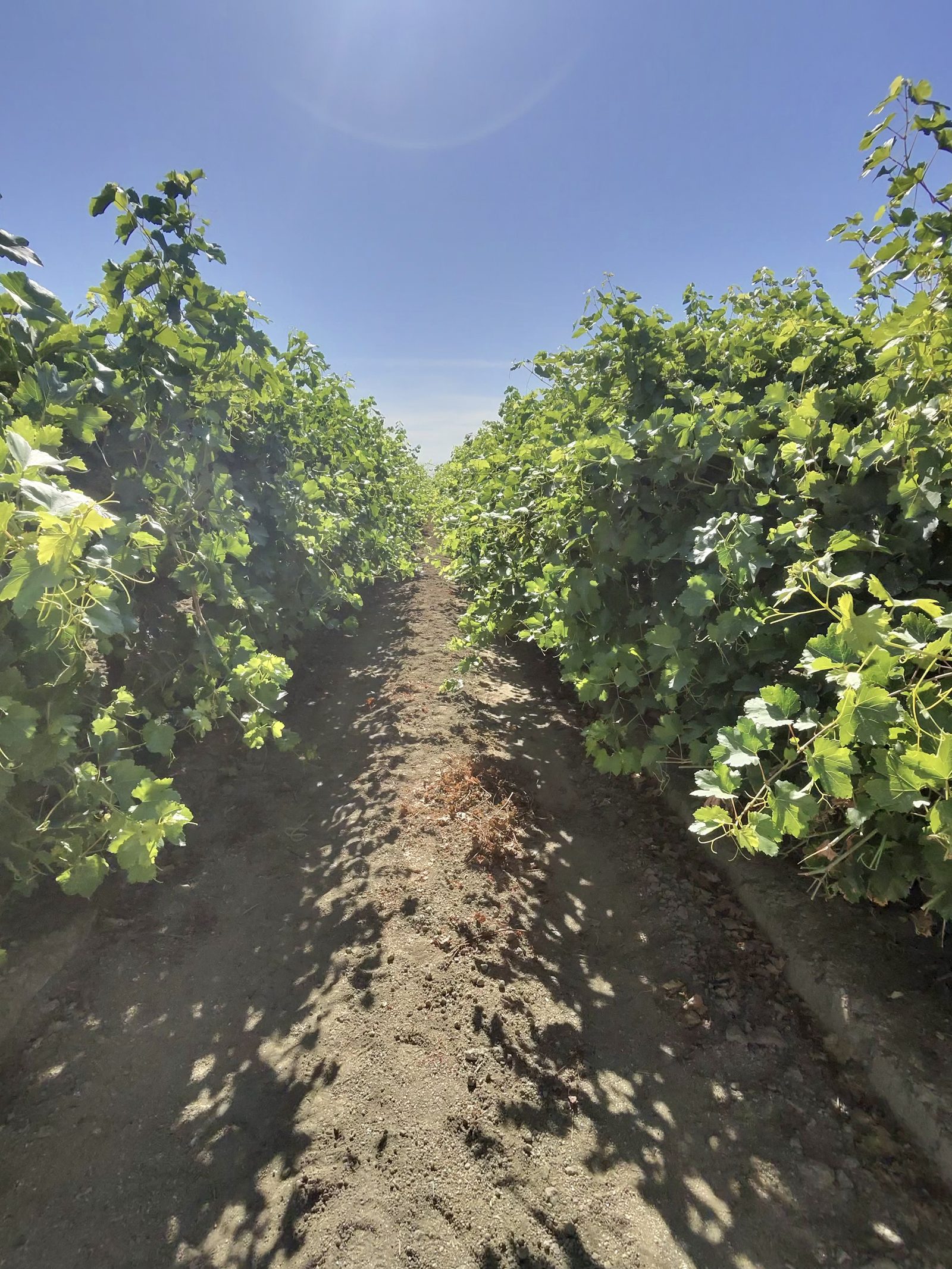
If you walked into a supermarket in 1970s America, table grapes were a summer event. California's San Joaquin Valley supplied from roughly June through November, and when the last Coachella boxes cleared the dock in late autumn, the shelves went empty. Grapes were seasonal, local, and temporary, and consumers largely accepted this.
That world no longer exists. Today, a retail buyer in London, Los Angeles, or Shanghai can source table grapes continuously, any colour, any size, for twelve months of the year. The mechanism is hemisphere arbitrage at industrial scale: while the Northern Hemisphere rests, the Southern Hemisphere harvests. Peru, Chile, South Africa, and Australia ship December through April; India and Egypt bridge into May and June; California opens in June; then the relay continues through Uzbekistan, Turkey, and Mediterranean producers before looping south again.
The achievement is not merely logistical. It required three simultaneous revolutions: breeding varieties with the shelf-life to survive three-week ocean voyages, building refrigerated cold-chain infrastructure across six continents, and creating intellectual property frameworks that allow private breeders to fund the R&D required to keep pushing the season, earlier starts, later finishes, tighter clusters.
"The 12-month continuity that Jazz apples achieve from a single country in each hemisphere is almost impossible for table grapes. To supply Thompson Seedless year-round to the EU, you'd need to relay from Namibia to South Africa to Peru to Chile to India to Egypt to Italy to Greece and back again."
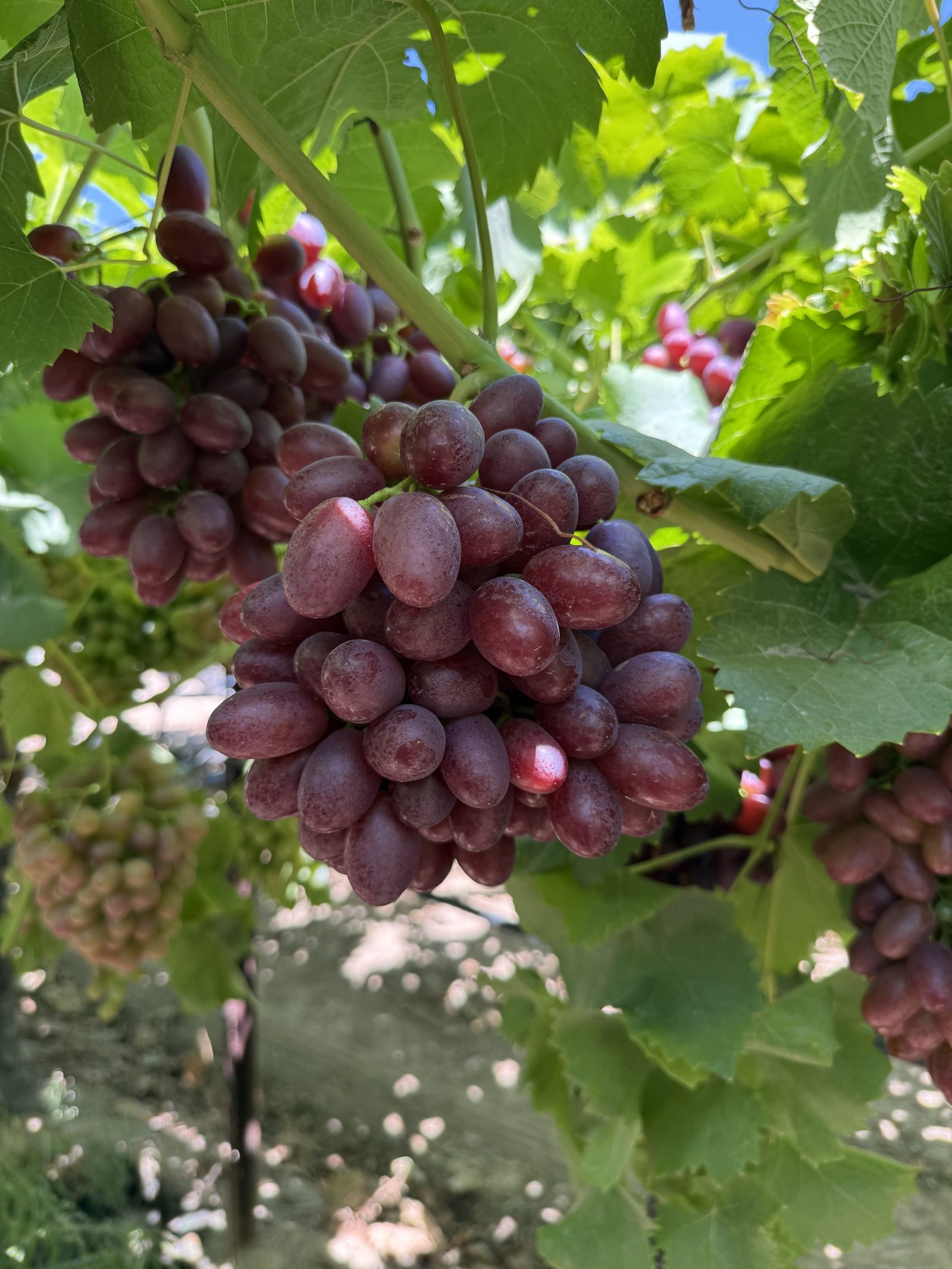
The physical challenge of maintaining that relay is enormous. Unlike apples, table grapes cannot be held in controlled atmosphere storage for months. They are fragile, they dessicate, they shatter. A Crimson Seedless picked in Chile in January must reach a UK shelf by early March in eating condition, which means ethylene control, sulphur dioxide pad treatment, humidity management, and pre-cooling to within hours of harvest. The cold chain is not optional; it is structural.
The transformation of the global season has been most dramatic at the two ends: the very early window (May–June) and the very late window (November–January). Coachella Valley in California opens the US domestic season in late May, producing at genuinely premium economics. In the 2025/26 season, Sun Pacific's Coachella production ran at FOB prices of $31–33 per box for Sweet Globe and Ruby Rush, compared to San Joaquin Valley equivalents at $23–28. The early premium is real and it is structural, it reflects not just timing but the cost of farming in one of the world's most expensive desert regions.
Post-harvest technology has extended both ends of the domestic season significantly. The Crimson Seedless variety can hold in cold storage for 90 or more days without browning, roughly double the tolerance of Thompson Seedless, a trait that was specifically selected for, not accidental. Newer proprietary varieties like AutumnCrisp and Krissy are engineered for exactly this: extended hang time on the vine plus superior post-harvest keeping quality.
The Science
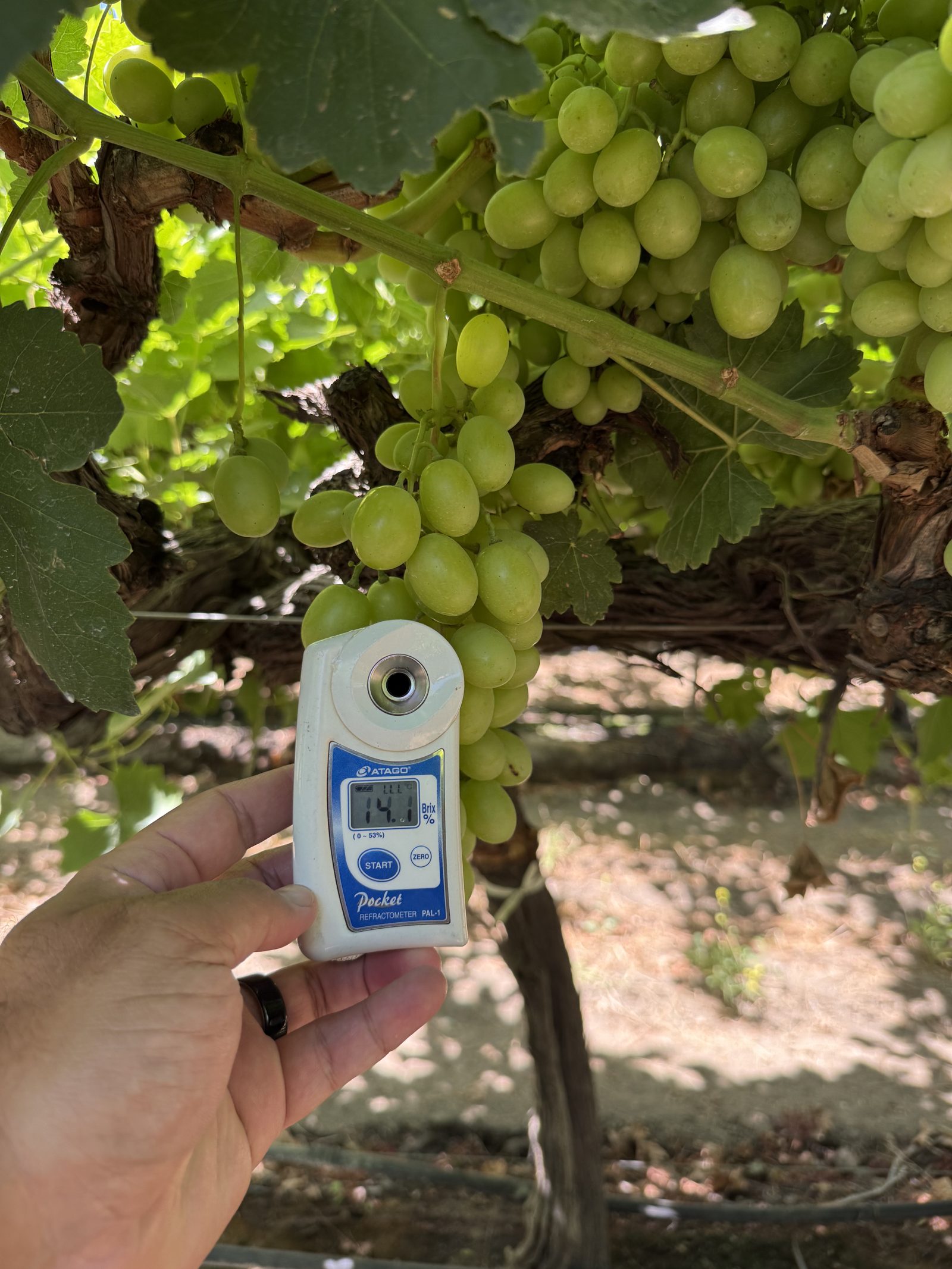
Table grapes present breeders with a uniquely difficult set of constraints. The biology of Vitis vinifera, the European wine grape species that forms the base of virtually all commercial table varieties, locks breeders into long development cycles. A cross made today may not yield a commercially viable selection for 10–20 years. Each seedling requires years of evaluation before advancing, and the number of selections that survive from the first screen to commercial release is vanishingly small. IFG grows over 75,000 seedlings annually across 80 acres of test land, crossing millions of blossoms by hand, to advance what is ultimately a handful of new varieties per year.
The core biological challenge is seedlessness. Consumers will not buy seeded table grapes at meaningful scale in Western markets. But seedlessness is genetically complex, the trait must be reliably inherited across breeding generations while simultaneously stacking other desirable characteristics: large berry size, crack resistance, neutral-to-sweet flavour profile, tight cluster architecture, and critically, the post-harvest durability to survive international shipping.
The mechanism used by commercial breeders is embryo rescue, since seedless varieties cannot naturally set fertile seed, breeders extract the immature embryo from the berry before it aborts, culture it in a lab medium, and grow it into a plant. This technique, combined with careful selection of seeded parent lines, allows the propagation of seedless offspring that would otherwise be impossible to recover.
"We're crossing North American table grapes with European table grapes, bringing the best of both species forward. Something that once took 20 years, we can now do in 10, because of good molecular techniques."
The genetics of table grape flavour are now increasingly understood at the molecular level. The muscat flavour, that floral, lychee-adjacent character, is controlled by a relatively small number of genes, which is why breeders at IFG were able to systematically introduce it into the non-muscat seedless background to create Cotton Candy. What appears to consumers as an exotic novelty is, at the breeding level, a precisely targeted gene combination.
The other major biological frontier is climate adaptation. Most commercial table grape varieties require significant winter chilling to break dormancy and crop reliably. As climate zones shift, the chilling requirement, traditionally an asset in high-altitude or maritime climates, becomes a liability. Sun World's breeding program at Wasco explicitly targets reduced chilling requirements to expand the geographic range of commercial production, an approach that mirrors what IFG has done with cherry breeding in low-chill environments.
Why natural grape breeding is almost impossibly hard
Seedless grapes cannot self-propagate. They have no viable seed. Every commercial seedless variety in the world originated as a single, hand-crossed selection, grown from an embryo-rescued seedling, evaluated for years in trial blocks, and then propagated entirely by cuttings. The variety you buy has never reproduced sexually. It is, effectively, a clone.
Molecular marker-assisted selection is compressing this timeline. IFG estimates modern techniques can reduce a full breeding cycle from 20 years to roughly 10. The investment required to maintain this capability, laboratories, germplasm banks, molecular science teams, is a significant barrier to entry and one reason consolidation is accelerating.
The Genetics & Breeding Companies
The table grape genetics industry has undergone a seismic consolidation in a single calendar year. The 2023 acquisition of IFG by AMFresh's SNFL Group, backed by private equity from EQT Future and Paine Schwartz Partners, created Bloom Fresh International, now the world's largest premium fruit breeding entity. The deal brought together IFG's flavour-forward California germplasm (Cotton Candy, Moon Drop, Sweet Globe) with SNFL's European and Southern Hemisphere network (ARRA varieties), operating across 24 countries. The combined entity holds over 90 plant patents across table grapes and cherries.
This mirrors, almost precisely, what happened in grain seeds two decades ago, Monsanto absorbing DeKalb, Pioneer merging with DuPont, where the breeding layer of the value chain consolidated faster than anyone expected, leaving growers increasingly dependent on a small number of IP holders for access to commercially viable genetics. The parallel is not lost on industry observers.
A production report from Sun Pacific Marketing, one of California's largest table grape shippers, covering the 2025/26 season (June 2025–May 2026) provides a rare view into the real economics of licensed variety production at commercial scale. The portfolio is almost entirely Sun World genetics: AutumnCrisp dominates the SJV book at over 3,200 acres and a projected 5.7 million boxes; Ruby Rush runs at 503 acres with 923,000 boxes in SJV alone. Scarlotta covers 937 acres; Ivory 392 acres; Krissy 477 acres; Autumn King 478 acres.
The data confirms that proprietary licensed varieties have entirely displaced open-pollinated commodity grapes in commercial production at scale. The only legacy variety visible in the dataset is Scarlet Royal, and its acreage is old vine, not replanted. The new-vine investment is exclusively in licensed genetics.
Bloom Fresh varieties (IFG-heritage), Sweet Globe, Applause54, and Candy Hearts, also appear in meaningful volume, confirming that growers are now navigating a multi-licensor landscape and that the competition between Sun World and Bloom Fresh is playing out in actual field planting decisions.
The business model of both major players is identical in structure to what pharma companies do with drug patents: develop, patent, license, collect royalties. Royalty rates of $0.10–$0.25 per kilogram are typical for premium licensed varieties, with volume discounts for large growers. The royalty stream is stable, recurring, and geographically diversified, a compelling model for private equity capital, which explains why the sector attracted EQT and Paine Schwartz.
Source: Sun Pacific Marketing Grape Production Report, Aug 26 2025. FOB prices reflect actual YTD sold box averages. Coachella early-season premiums (Ruby Rush $33, Sweet Globe $31) not shown.
Production, Trade & Cost Data
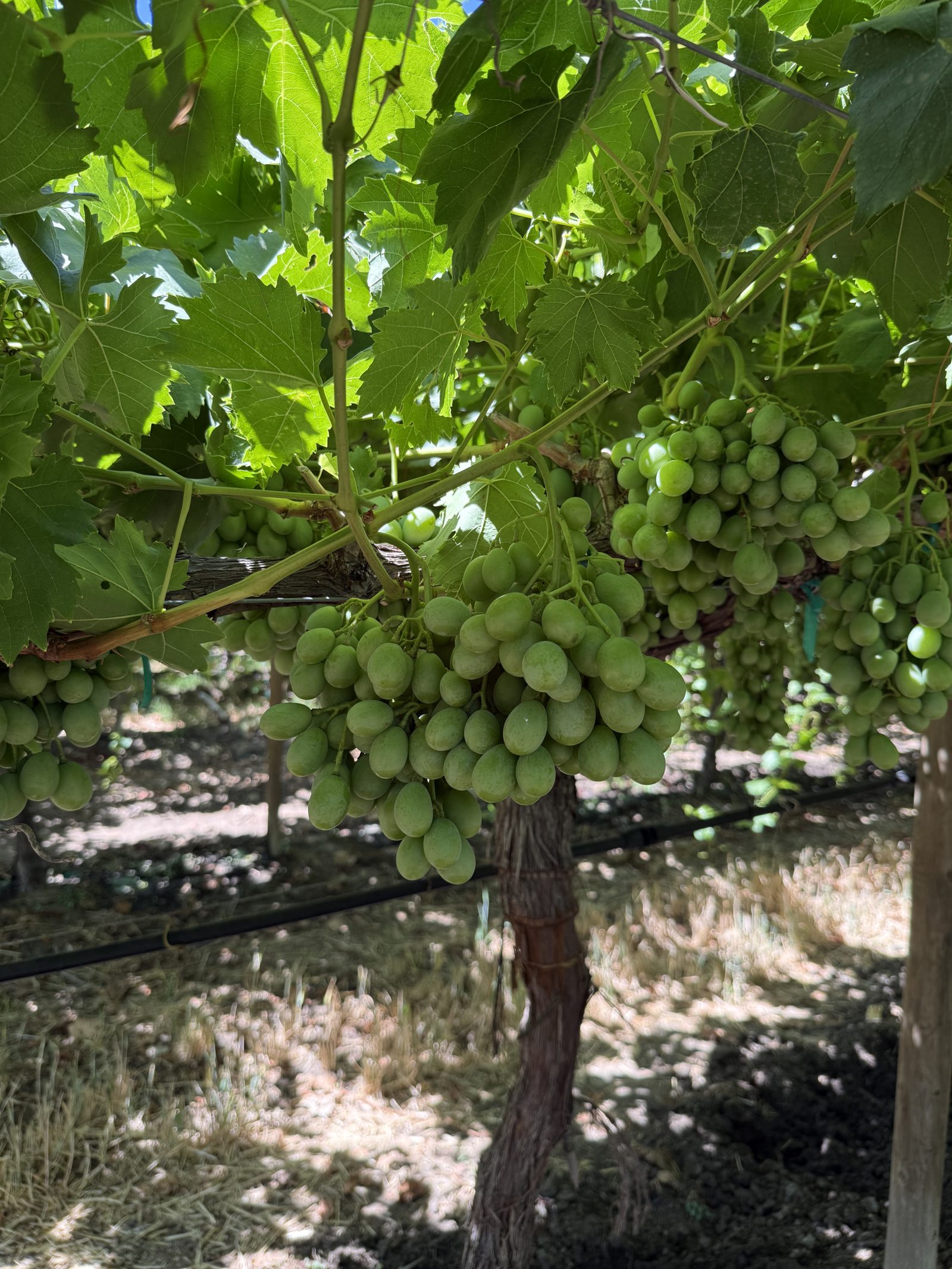
Global table grape production has grown by approximately 60% between 2010/11 and 2023/24 (USDA). The dominant story is China, whose output dwarfs every other producer and continues to expand. The USDA estimates China's table grape production at 13.5 million tonnes in 2023/24, roughly 48% of all table grapes grown globally. This is a staggering concentration of supply in a single country, and yet China remains primarily a domestic consumption market: despite becoming the world's third-largest exporter in 2023, it still consumes the vast majority of its own production.
Source: USDA FAS / Fluctuante / Blue Book, 2024. Peru surpassed Chile as #1 exporter in 2023 for first time on record.
| Country | Volume | YoY | Share |
|---|---|---|---|
| 🇺🇸United States | 746 kt | +4.6% | |
| 🇩🇪Germany | ~400 kt | ~flat | |
| 🇳🇱Netherlands | ~320 kt | +3% | |
| 🇷🇺Russia | ~280 kt | ↑ China | |
| 🇬🇧United Kingdom | ~250 kt | stable | |
| 🇨🇳China (premium) | Growing | rapid |
Source: USDA FAS Dec 2025; TradeImeX 2024. Netherlands functions as European re-export hub. US imports forecast to reach 915,000 tonnes by 2025/26 (USDA FAS Dec 2025).
Source: Industry-supplied figures (International Fruiterer). Peru est. ~$12–16/box (labour cost advantage). South Africa est. ~$14–18/box (ZAR 27–29 minimum wage). Cost differential drives the structural trade shift toward Southern Hemisphere origin.
Why Peru is winning and what happens when it runs out of water
Peru's cost advantage over Australia is roughly $10 per box, and over $6 per box against California. At millions of boxes per season, that differential is insurmountable without either a fundamental quality premium or regulatory protection. Peru's exports grew at 14.3% annually over the past five years. Chile's exports declined 6.6% per year over the same period. The US export position is contracting at 10% per year. The cost curves only converge in one direction, and the environmental constraint on Peru's continued expansion is groundwater. That constraint is approaching faster than the industry acknowledges publicly.
Environmental & Social Reality
The global table grape industry's environmental footprint is concentrated at a small number of flash points. The water situation in Peru is the most urgent. The labour situation in California and South Africa involves its own structural tensions. And the pesticide picture in China, with several recent international incidents involving residue breaches, is adding regulatory pressure to the industry's fastest-growing producer.
Peru / Ica Valley, Aquifer Collapse
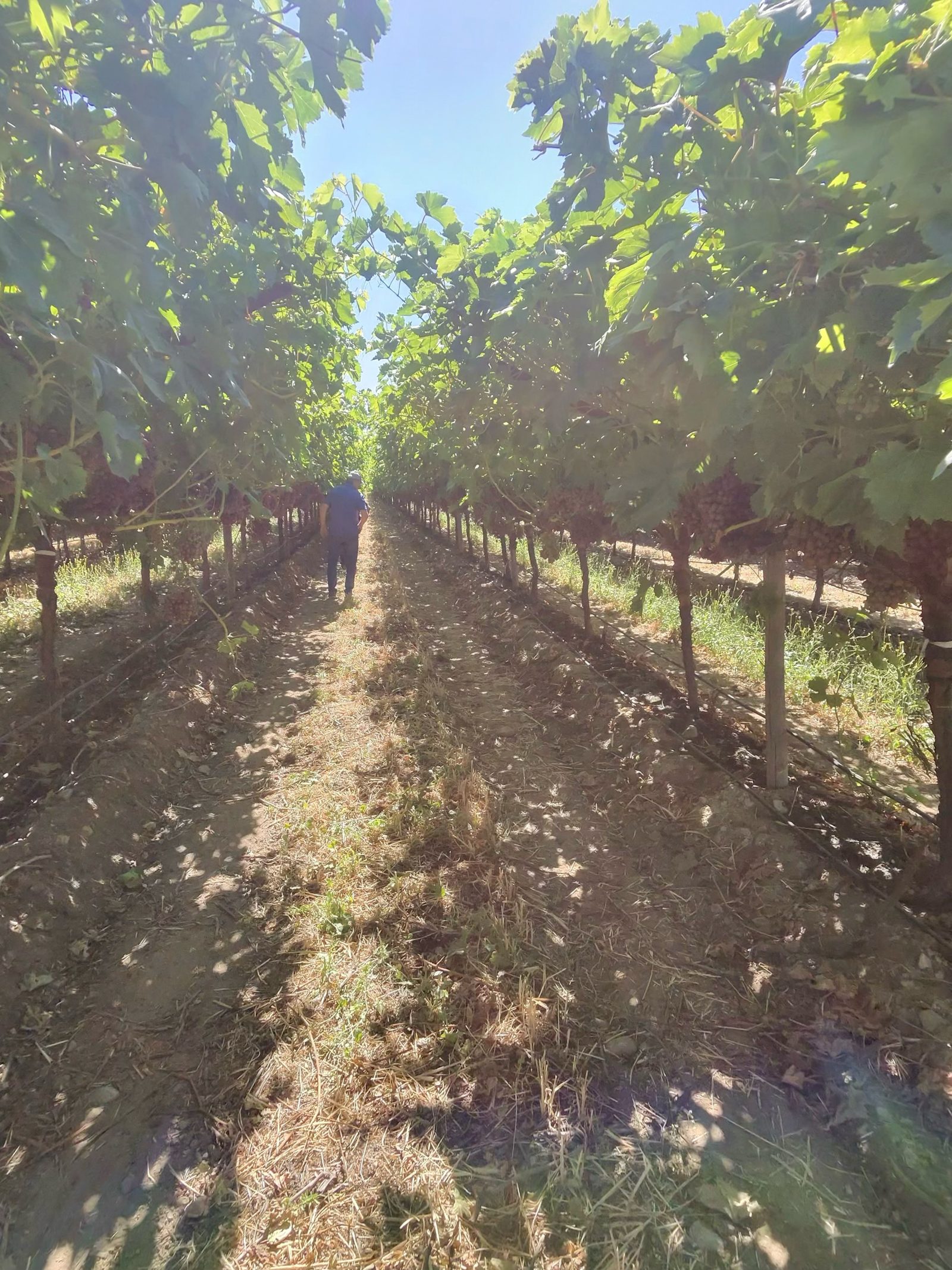
The Ica-Villacurí aquifer, which underpins virtually all table grape and asparagus production in Peru's primary export region, has been in a state of chronic overexploitation since the early 2000s. Groundwater extraction reached 409 million m³ by 2013, more than 60% above the aquifer's sustainable recharge rate. A 2024 technical report found the exploitation "profoundly unsustainable" and causing irreversible impacts on local communities. Agro-exports, primarily asparagus and grapes, account for 67% of the region's total groundwater footprint.
China, Pesticide Residues
In 2024, the Thai government found chlorpyrifos (a pesticide banned in Thailand) and 13 other chemical residues exceeding legal limits in Shine Muscat grapes imported from China. Indonesian and other Southeast Asian food agencies launched parallel investigations. China's Shine Muscat production has grown explosively in recent years, often in regions with limited regulatory oversight. The incident signals a systemic quality control problem in a rapidly scaled industry segment.
California, Labour & Water
California's table grape harvest relies heavily on the H-2A temporary visa program. In 2025, the state still lacked over 8,000 pickers at peak harvest, leaving an estimated 5% of fruit unpicked. At the same time, water allocations in the San Joaquin Valley are tightening under SGMA (Sustainable Groundwater Management Act), forcing fallowing decisions that are accelerating the shift of production south. Hurricane Hilary's 2023 irrigation damage contributed to the third consecutive year of production decline.
Chile, Declining Competitiveness
Chile's table grape area planted fell from 53,851 hectares in 2011/12 to 43,025 hectares in 2022/23, a 20% decline, driven by low profitability and Peruvian competition. Climate variability (drought in 2020/21, damaging rains) compounded the structural erosion. The variety portfolio is ageing: without significant replanting to new licensed varieties, Chilean competitiveness will continue to erode. The 2023/24 season saw Chile temporarily reclaim the Southern Hemisphere export lead as El Niño disrupted Peru, but this was situational, not structural reversal.
Drip Irrigation Adoption
Table grapes are among the highest adopters of precision drip irrigation globally. Major Peruvian and South African operations have achieved significant water use reductions relative to older flood-irrigation baselines. In the Ica Valley, large commercial farms demonstrate higher water productivity per tonne than smaller traditional operations, though this efficiency has been partially offset by expansion of total planted area. Where drip irrigation replaces flood systems, it is a genuine environmental improvement.
Sea Freight vs. Air
Virtually all commercial table grape trade moves by refrigerated sea container rather than air freight. This is a significant carbon advantage over air-freighted soft fruit like blueberries and strawberries. A container of grapes from Peru to Rotterdam generates a fraction of the per-kilo emissions of air-freighted alternatives. The cold chain is energy-intensive, but the transport mode is the most efficient option available at this scale.
Ica / La Libertad
CRITICAL. Aquifer recharge overexceeded since mid-2000s. Ica-Villacurí extraction at 409 hm³/yr against sustainable yield of ~252 hm³. Irreversible subsidence documented. Regulatory enforcement inconsistent. Northern Peru (La Libertad) has better water access but faces rapid expansion pressure.
San Joaquin Valley
HIGH. SGMA legislation (2014) requires all groundwater basins to reach sustainability by 2042, requiring significant fallowing of lower-value crops. Table grapes face competition for remaining water allocations from almonds and citrus. Fallowing decisions are accelerating labour retraining challenges.
Hex River / Orange River
MODERATE-HIGH. Orange River valley benefits from surface irrigation from the Gariep Dam, but lower rainfall projections under climate change scenarios are concerning. Hex River valley, the premium Western Cape region, is more rain-fed but faces increasing drought frequency. Wage floor rose to ZAR 29.15 (USD 1.59/hr) in 2025, lowest of major exporters.
Atacama / Coquimbo
MODERATE-HIGH. Northern Chile's primary grape regions face persistent drought. The 2020/21 season saw catastrophic drought impact followed by damaging rain, a pattern consistent with increasing climate volatility. Declining planted area is partly a rational response to both economic and water pressure.
Murray-Darling Basin
MODERATE. The Murray-Darling Basin Plan allocates water rights with some environmental flow obligations, creating genuine constraints on irrigation expansion. Water trading markets allow efficient allocation but can price smaller growers out. Australia's high labour cost ($28–33/hr) means water efficiency investment is economically rational and often leads the industry globally.
Sonora / Hermosillo
MODERATE-HIGH. Sonora's production depends heavily on reservoir and groundwater irrigation in an increasingly arid climate. Production costs rose 35% in two years driven by labour shortages and input price inflation. Mexico's proximity to the US market is its structural advantage; its water position is its structural risk. Grape exports surged 150% in value in 2024, the most rapid growth of any major exporter.
Outlook
Precision Breeding Acceleration
Marker-assisted selection and genomic tools are compressing the breeding cycle from 20 years to 10. Sun World explicitly uses "data analytics, AI and gene-editing tools" to improve water use efficiency and disease resistance. Bloom Fresh's combined germplasm pool, merging IFG's flavour genetics with SNFL's European and Southern Hemisphere varieties, creates an unprecedented base for accelerated breeding. The next decade will likely produce varieties adapted to warmer, drier growing conditions specifically, not as a byproduct but as a design target.
China's Dual Role, Producer and Premium Importer
China simultaneously produces nearly half the world's table grapes and is rapidly growing as an importer of premium varieties. Japan and Australia command USD $10–15/kg for Shine Muscat in the Chinese premium market. This is the same dynamic seen with other luxury agricultural products, domestic production supplies the mass market while imports signal status. The pesticide residue incidents of 2024 threaten to slow this dynamic but are unlikely to reverse it. China's domestic consumers are increasingly brand and provenance conscious.
The Peru Water Reckoning
The industry's single most significant structural risk over the next 10–15 years is the depletion of the Ica-Villacurí aquifer. Peru's export growth is built on an unsustainable hydrological base. When, not if, regulatory or physical constraints force water rationing in Ica, the global export supply balance shifts dramatically. The transition to La Libertad in northern Peru provides some buffer, but not a complete replacement. This is a story the industry does not discuss publicly; it is, however, visible in satellite imagery and peer-reviewed hydrology literature.
The Royalty Squeeze on Growers
As Bloom Fresh and Sun World consolidate their licensing positions, growers face an increasingly difficult economics: rising royalty obligations ($0.10–$0.25/kg) on top of rising labour, water, and input costs. The analogy to grain seeds is instructive but imperfect, table grape growers can switch varieties at replanting, which occurs every 15–25 years, giving them some leverage. But as the number of commercially viable licensed varieties narrows and consumer demand for branded varieties grows, the power balance favours the breeders.
India, The Emerging Export Force
India's table grape exports are growing at 10.2% per year, the fastest growth rate of any significant exporter, driven by new cold-storage capacity in Nashik and preferential tariff access in UAE and Southeast Asian markets. India exported 280,000 tonnes in 2024/25. The country's cost structure is competitive with Peru, and its geographic position gives it natural access to Middle Eastern, Southeast Asian, and European markets that South America cannot serve as efficiently. This is a slow-moving but powerful structural shift.
The Apple-ification of Grapes
Sun World's Autumncrisp® campaign, generating 400 million consumer impressions in 2024, is the most ambitious attempt yet to brand a table grape variety the way Pink Lady branded apples. If successful, it creates a virtuous cycle: consumer recognition → retail demand → grower willingness to pay royalties → breeders fund more innovation. The question is whether grape consumers will sustain the varietal loyalty that apple consumers have demonstrated. The evidence from Cotton Candy is encouraging: consumers demonstrably seek out specific varieties when they know what they like.
The convergence of water scarcity, IP consolidation, and China's export ambition will reshape the global trade map within a decade
Three forces are moving simultaneously. Peru's hydrological position is deteriorating. The genetics layer of the industry has effectively consolidated into two major players. And China, with 48% of global production, expanding export ambitions, and a domestic premium import market growing at pace, is becoming simultaneously the industry's largest producer, fastest-growing exporter, and most important consumer. The 15-year-old model of "Southern Hemisphere exports to Northern Hemisphere winter consumers" is about to get a great deal more complicated.