The oldest fruit in human memory, and a crop with secrets still being unearthed from 2,000-year-old desert tombs
There are fruits with interesting histories, and then there is the date. Phoenix dactylifera is not simply old, it is one of the oldest deliberately cultivated food crops on earth, with its domestication almost certainly predating writing itself. The earliest seeds found in organised human settlements come from the Indus Valley, dated to the sixth millennium BC. By 4000 BC it was already a cornerstone of Sumerian civilisation along the Tigris and Euphrates, used not just for food, but as construction material, raw fibre, animal feed, wine, and vinegar. The Sumerians, those relentless agricultural optimisers, even invented artificial pollination for it: they climbed the palms, cut the male flower clusters, and pressed them into the female flowers to guarantee yield. That technique is still in use today.
From Mesopotamia the date palm spread along two axes: east toward the Indus Valley and what is now Pakistan; west from Egypt through Libya, across the Maghreb and into the Sahara oasis systems of Tunisia, Algeria and Morocco. The Arab caravan routes, what we'd later call the Silk Road, carried dates across continents as the essential desert travel food: calorie-dense, durable, and nutritious enough to sustain a person through weeks of nothing else. The famous Arabic maxim captures it precisely: the palm likes "its feet in water and its head in the fires of heaven."
"Dates were not merely traded on the Silk Road, they were the fuel on which the Silk Road ran. No other single food could sustain a camel caravan through the Rub' al Khali."
In the religious canon the date achieves full mythological status. It appears in the Old Testament (King David named his daughter Tamar, Hebrew for palm). The Quran specifically recommends the date to Maryam, the Virgin Mary, during childbirth. Islam's Ramadan fast is traditionally broken with a date and water, a practice that has created perhaps the most reliable demand cycle in global food trade: every year, a billion Muslims simultaneously want the same fruit. The date palm appears on both ancient Hebrew coinage and the modern Israeli shekel, a symbol that has outlasted every empire that used it.
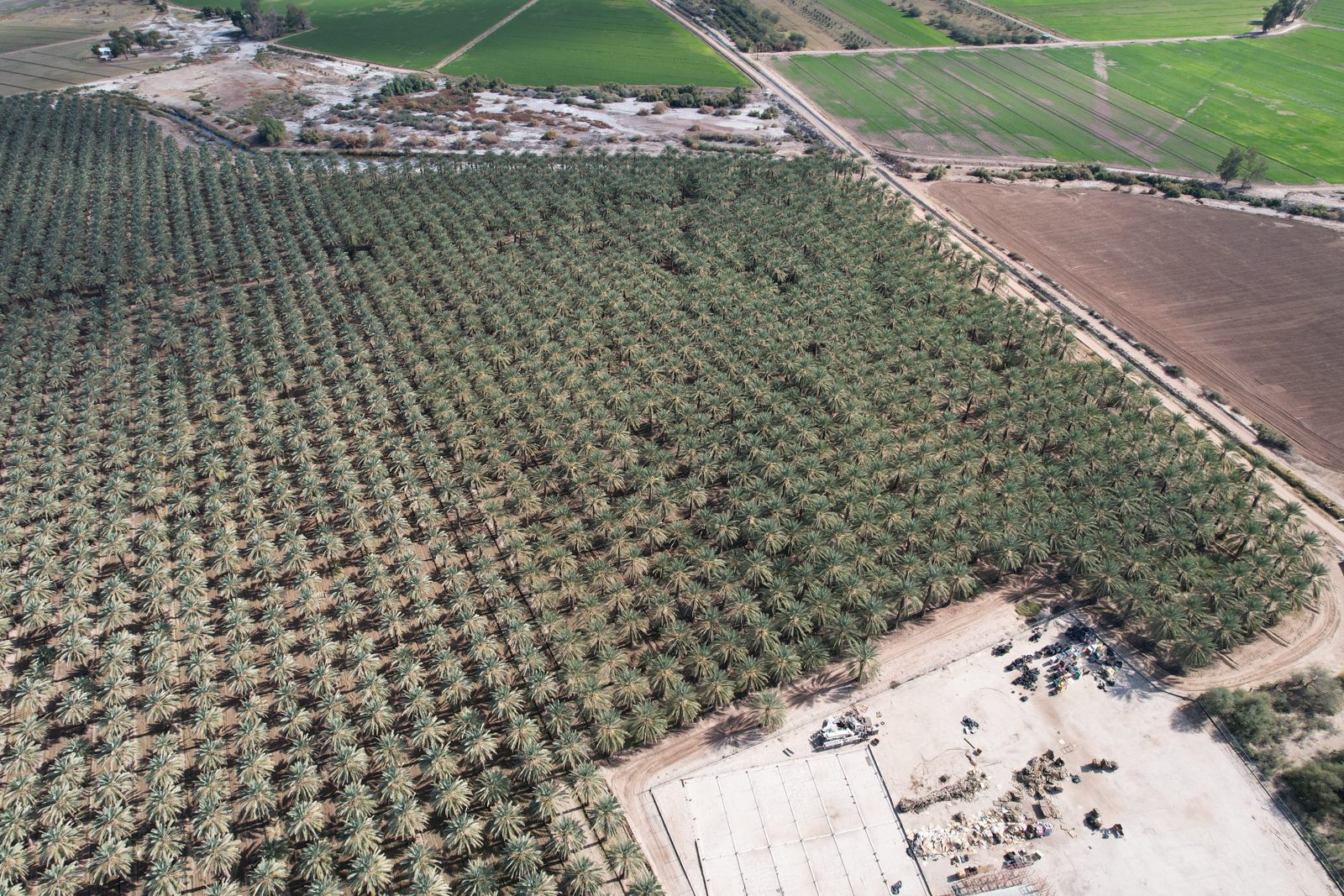
The Coachella Valley in California only entered the date story in 1898, when the USDA sent representatives to Baghdad, inspired, reportedly, by One Thousand and One Arabian Nights, to collect date offshoots for trial. The Barhee variety arrived from Basra, Iraq in 1913. Deglet Noor came from Algeria in 1900. These aren't just horticultural footnotes, they're the founding chapters of a US industry now worth hundreds of millions of dollars annually.
What has changed in the modern era is not the availability window for dates (they're naturally long-storing, so supply chains were always reasonably extended) but the premiumisation of the supply chain, the emergence of fresh khalal (crisp, yellow, unripened) dates as a market category, and the massive expansion of production capacity in Egypt, Saudi Arabia and Iran driven by state subsidies and new irrigation infrastructure.
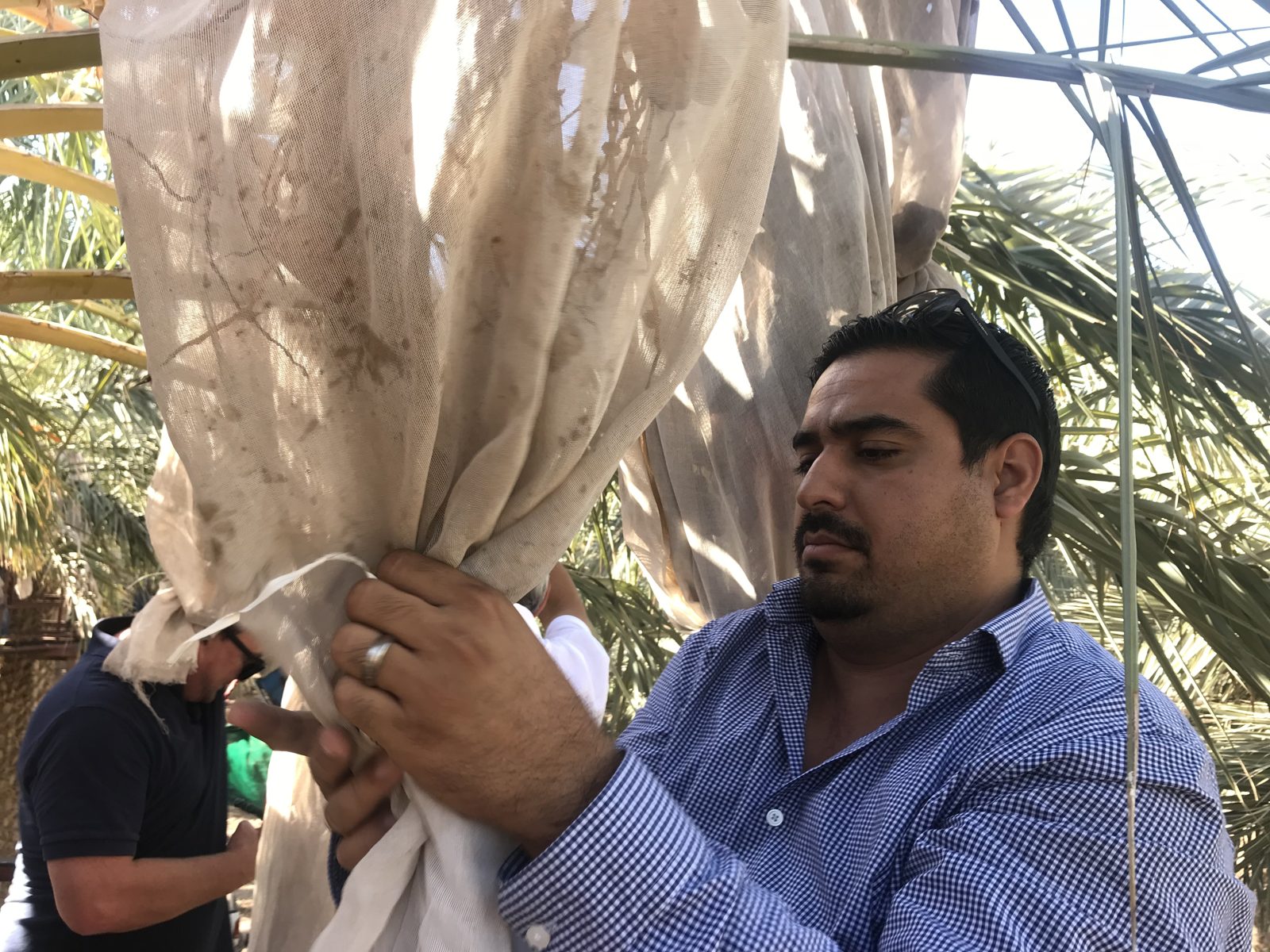
Date palms are among the most biologically extreme of any commercially cultivated fruit crop. Phoenix dactylifera is dioecious, male and female flowers grow on separate trees, which means every commercial date farm requires careful management of the sex ratio and active pollination. In the wild, a grove might carry a 50:50 male-to-female ratio. Commercially, a ratio of one male to 50 females is typical; every male is managed for its pollen, hand-collected and distributed at peak flowering, just as the Sumerians did.
A date palm can live for more than 200 years and begin producing meaningful yields only after four to eight years of establishment. Commercial peak production arrives around 10–15 years, and a well-managed tree can remain productive for 60–80 years. This extraordinarily long biological commitment is one reason the date industry has a different character to almost any other fruit crop, growers plant for their grandchildren, not next season's market.
"A date palm can survive 50°C summer heat, tolerate highly saline soil, and withstand drought, but it demands water at the root. It's not a desert plant that thrives without water; it's a desert plant that finds water where others cannot."
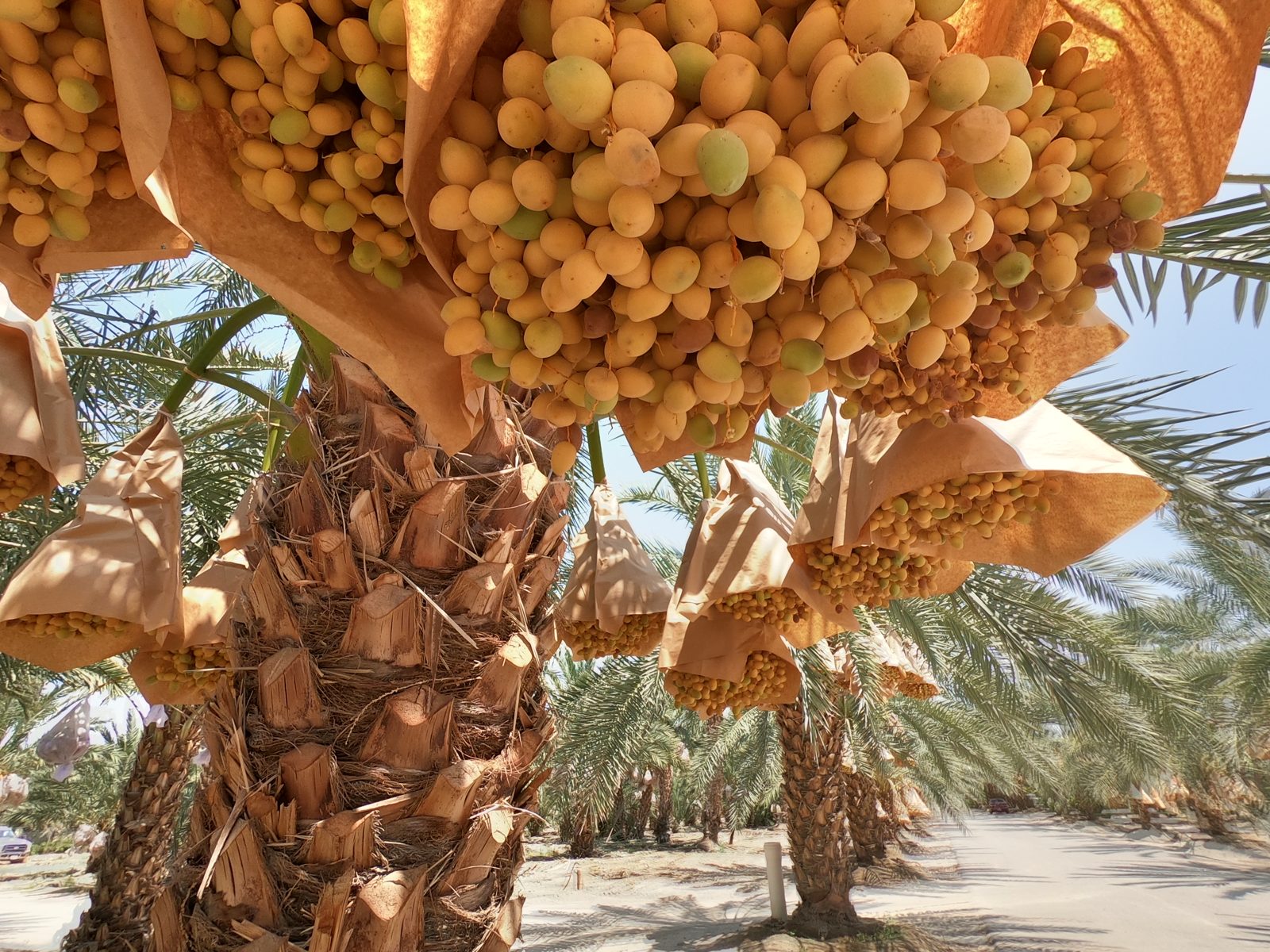
Dates develop through four distinct physiological stages, each with a traditional Arabic name still used in commerce: Hababauk (fruit set), Kimri (green, hard, high-tannin), Khalal (yellow or red, full size, crunchy, increasingly sold as fresh eating dates), Rutab (soft, beginning to ripen, sticky), and Tamr (fully ripe, dried, the shelf-stable commodity). Different varieties peak commercially at different stages, Barhee is prized at the Khalal stage; Medjool at Rutab/Tamr; Deglet Noor is best at full Tamr.
The crop's tolerance architecture is genuinely remarkable. Date palms handle soil salinity levels that would kill most fruit trees. They can photosynthesise at temperatures above 45°C. They are one of the few tree fruits that produce meaningful yields on saline groundwater, a crucial advantage in the Gulf states where freshwater is increasingly scarce. Yet despite this drought-hardy reputation, optimal production requires substantial irrigation: research in Saudi Arabia suggests 19 cubic metres of water per tree per season for maximum yield, and flooding irrigation (still practised on around 90% of Egyptian palms in 2008) is massively wasteful. The transition to drip and bubbler systems is underway but slow.
Post-harvest, dates are among the most naturally shelf-stable of all fresh fruits. High sugar concentrations (70–80% by dry weight) and low water activity suppress microbial growth without refrigeration. Traditional desert storage in clay pots or woven baskets could preserve dates for a year or more. Modern controlled atmosphere storage extends this further, but the biology was already solved six thousand years ago.
In 1963, archaeologists excavating Herod the Great's fortress at Masada, overlooking the Dead Sea, found a cache of date seeds in a jar. They sat in storage at Bar-Ilan University for over 40 years. In 2005, Dr. Sarah Sallon of the Hadassah Medical Organization obtained several and gave them to horticulturalist Dr. Elaine Solowey at the Arava Institute. Solowey was sceptical, the seeds were, after all, two thousand years old. Using a basic bottle warmer and a lot of scientific patience, she planted them. After eight weeks, one germinated. It was named Methuselah, after the longest-lived person in the Bible.
Radiocarbon dating confirmed the seed was from between 155 BC and AD 64, placing it at the height of the Judean date palm's fame, when the region exported dates across the Roman Empire, prized for their exceptional size and reported medicinal properties. That variety had gone extinct by the time of the Crusades, around 800 years ago, when wars, invasions and drought destroyed the Jordan Valley's date forests. Methuselah was a male. A female was needed.
This story, a 2,000-year-old seed returning to fruit, is more than a scientific curiosity. It opens a direct window into ancient agriculture, ancient varieties, and the genetic history of a species whose oral tradition dates back to Sumerian civilisation. The Arava Institute now plans to offer the Judean dates commercially in limited quantities.
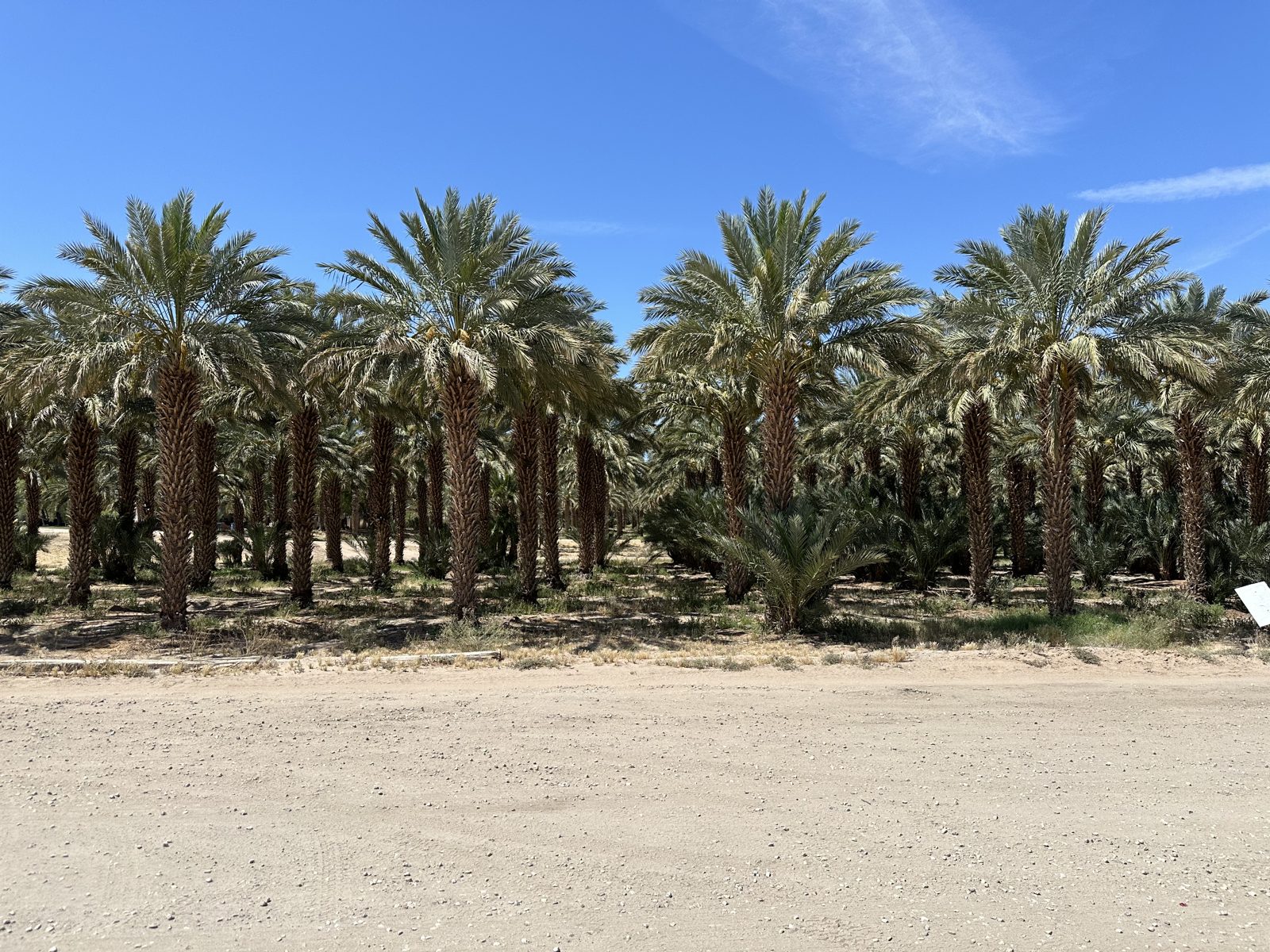
Unlike the grape or apple industries, where aggressive private IP and breeding program consolidation has created near-oligopolies, the date genetics landscape remains fragmented, diverse, and largely state-driven in the major producing nations. There are estimated to be more than 1,500 named varieties of date globally, with the majority held in local genebanks or traditional oasis farming systems. However, commercial trade is dominated by fewer than a dozen varieties, and a two-tier premium system is rapidly crystallising: Medjool at the luxury end, Deglet Noor as the commodity backbone.
The critical distinction in date genetics is geographic: date palms split broadly into two genetic populations, an eastern group (Iraqi, Gulf, South Asian varieties) and a western group (North African, Algerian, Tunisian, Moroccan varieties). Most elite commercial varieties sit in or between these poles. The Judean date research has shown that ancient cross-trading between these populations was more extensive than previously understood.
The IP landscape in dates differs fundamentally from table grapes or blueberries. Because date palms reproduce primarily through offshoots (vegetative clones, not seeds), variety protection is harder to enforce, anyone with access to an offshoot can propagate a variety. In practice, variety protection operates through grower exclusivity agreements and marketing rights rather than formal plant patents, though this is beginning to change for new breeding program outputs.
The date industry is at an inflection point. Unlike grapes or blueberries, where a handful of private genetics companies now control licensing revenue on a global scale, dates have maintained varietal diversity and relatively open access. But the rapid premiumisation of Medjool, the entry of sophisticated marketing companies into the category, and the growing interest of sovereign wealth funds in agricultural IP suggests this openness may not survive another two decades. Watch for the first meaningful attempt to patent a new date variety, it will signal a structural shift identical to what happened in grapes in the 1990s.
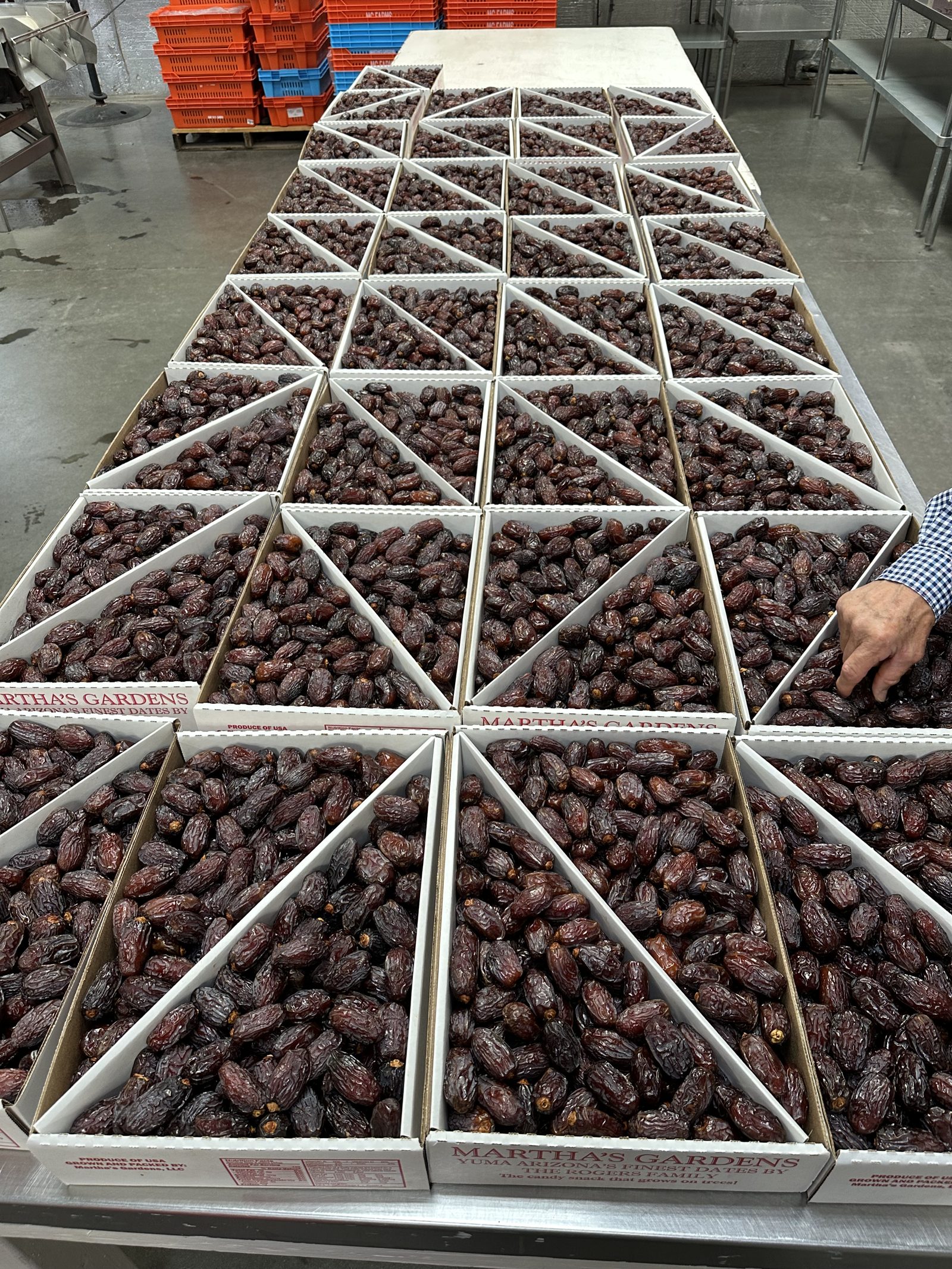
| Country | Key variety demanded | Volume context | YoY trend | % Global share | Import bar |
|---|---|---|---|---|---|
| 🇮🇳 India | Zahidi, Sayer, Mazafati | 150,000+ t/yr · largest single market by volume | ▲ Growing | ~18% | |
| 🇮🇩 Indonesia | Ajwa, Medjool, Safawi | Large Muslim population; Ramadan peak demand | ▲ Growing | ~9% | |
| 🇲🇾 Malaysia | Ajwa, Safawi, Medjool | Premium imports; high per-unit spending | ▲ Stable–rising | ~6% | |
| 🇬🇧 United Kingdom | Deglet Noor, Medjool | Year-round retail; Medjool premium growing | ▲ Stable | ~5% | |
| 🇩🇪 Germany | Deglet Noor, Medjool | Largest European market; health snack repositioning | → Stable | ~4% | |
| 🇺🇸 United States | Medjool (domestic + imported) | Major domestic Medjool producer; imports supplemental volumes | ▲ Steady | ~4% | |
| 🇧🇩 Bangladesh | Semisoft varieties, Medjool | Ramadan-driven; high volume, price-sensitive | ▲ Growing | ~4% | |
| 🇷🇺 Russia / CIS | Mazafati (Iran), Piarom | Iran's second largest market; disrupted post-2022 sanctions | ▼ Volatile | ~3% |
Note: Egypt's small export volume relative to its massive production reflects near-total domestic consumption. Over 1.9M tonnes produced; only ~23,000 exported, one of the highest domestic absorption rates in global commodity trade. Sources: World Integrated Trade Solution (WITS) 2023; ITC TradeMap; ReportLinker. UAE figures include re-exported volumes; actual domestic production is ~400,000t.
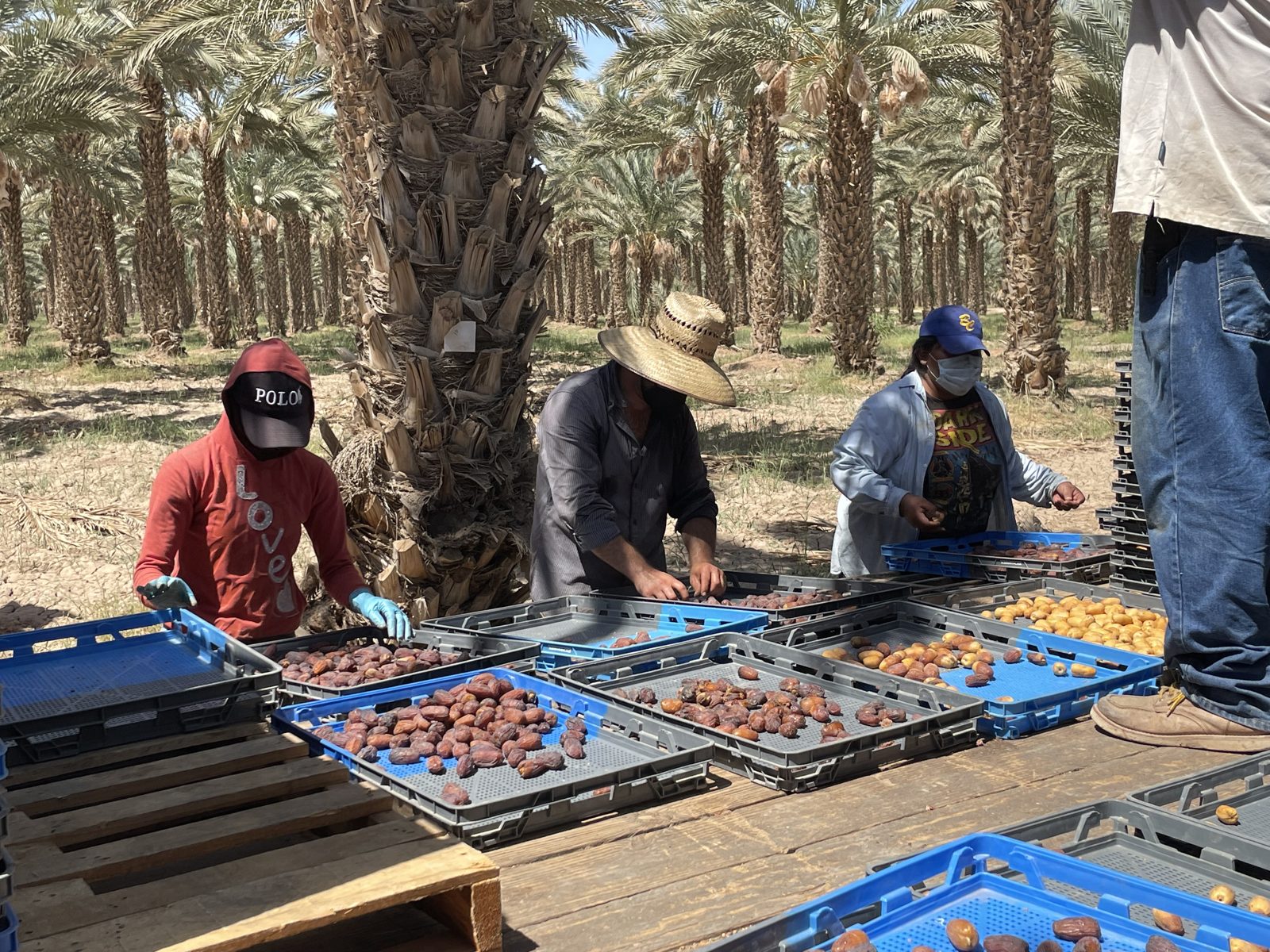
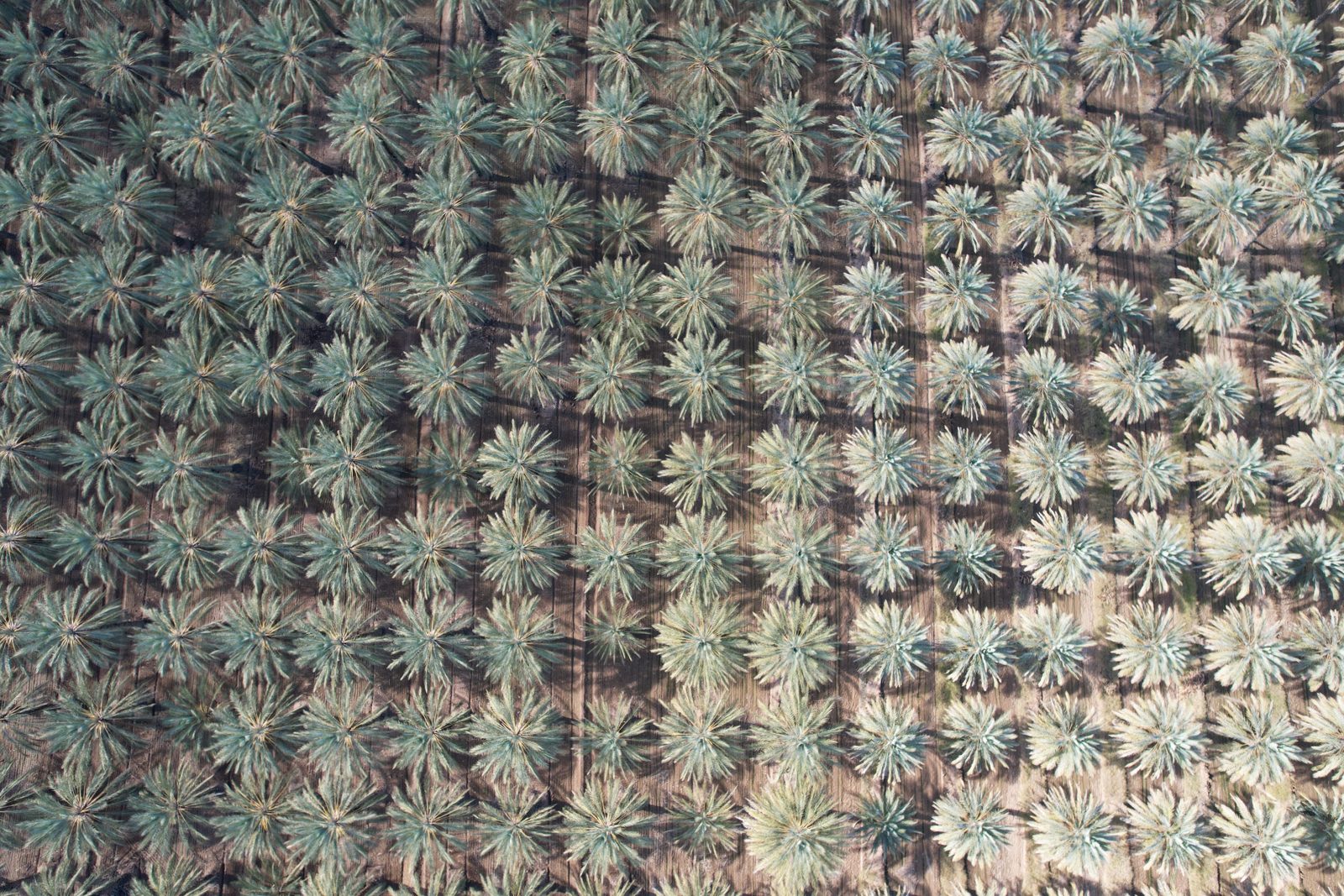
The date market's immediate future is structurally bullish. Market valuations of $12–13 billion in 2025 are projected to reach $23 billion by 2035 at a CAGR of 5–6%. The demand drivers are not exotic: global Muslim population growth, the ongoing repositioning of dates as a health-and-wellness superfood in Western markets, and the accelerating incorporation of date paste and date syrup into food manufacturing as a "clean label" alternative to refined sugar. Medjool, in particular, is seeing fastest-growth projections through 2033, the premium snack thesis is working.
"The date is one of the few agricultural commodities where the wellness industry and ancient religious tradition are pulling in precisely the same direction, and the market is only beginning to price that in."
Genomics and the Judean date program open a genuinely extraordinary dimension to this outlook. The research at the Arava Institute is not purely archaeological, it's a live experiment in recovering lost agronomic performance. If the extinct Judean date variety demonstrates commercially interesting characteristics (large fruit size is documented; claimed medicinal properties are being evaluated), it represents a potential variety release that combines extraordinary provenance with genuine novelty. No other fruit can offer a 2,000-year-old variety comeback story.
Climate vulnerability is the principal structural risk. The date palm's production geography, a belt from Morocco to Pakistan, overlaps almost perfectly with the regions most severely impacted by projected temperature increases and aquifer depletion over the next 30 years. Saudi Arabia has already recognised this implicitly, offshoring date production investment to Sudan, Senegal and Ethiopia. Iraq's rehabilitation depends on political stability that remains elusive. California's date operations depend on Colorado River allocations being renegotiated against competing urban and agricultural demands.
Emerging producers to watch: Namibia and Kazakhstan both showed positive growth trends in 2023 export data. Morocco's Medjool sector is expanding aggressively. Sub-Saharan Africa, particularly Sudan and Mauritania, holds enormous latent production potential on the right soils with adequate irrigation. These geographies are attracting Gulf sovereign wealth investment in agricultural land.
Technology trajectory: Precision drip and bubbler irrigation adoption is the single most important improvement available to the date industry today, shifting from flood irrigation (still >70% in some regions) to drip can reduce water consumption by 30–50% with yield-neutral or positive outcomes. Remote sensing for pest detection (particularly Red Palm Weevil) via drone and satellite is being trialled across the Gulf. Marker-assisted selection is beginning to accelerate breeding timelines beyond the traditional 10+ years per cycle. Tissue culture propagation of superior varieties is reducing the propagation bottleneck inherent in offshoot-only reproduction.
The date industry faces a decade that will define whether it remains a broadly distributed, culturally sovereign food system, with 1,500 varieties maintained across hundreds of oasis communities, or consolidates into a two-variety, IP-managed premium commodity on the pattern of table grapes. The Medjool premiumisation trend, combined with sovereign wealth entry and increasing genetic IP activity, points toward consolidation. But the extraordinary depth of cultural attachment to local varieties across the Arab world, Iran, and North Africa is a genuine countervailing force. Watch the IP moves; watch who buys the Californian date farms.