How selective breeding, genetics companies, and a global supply chain turned a three-week seasonal treat into a grocery staple, and what it's costing the planet.
2.0M+
Tonnes produced, 2024
748K
Tonnes exported, 2023
267K
Hectares planted, 2023
12×
Growth since 2001
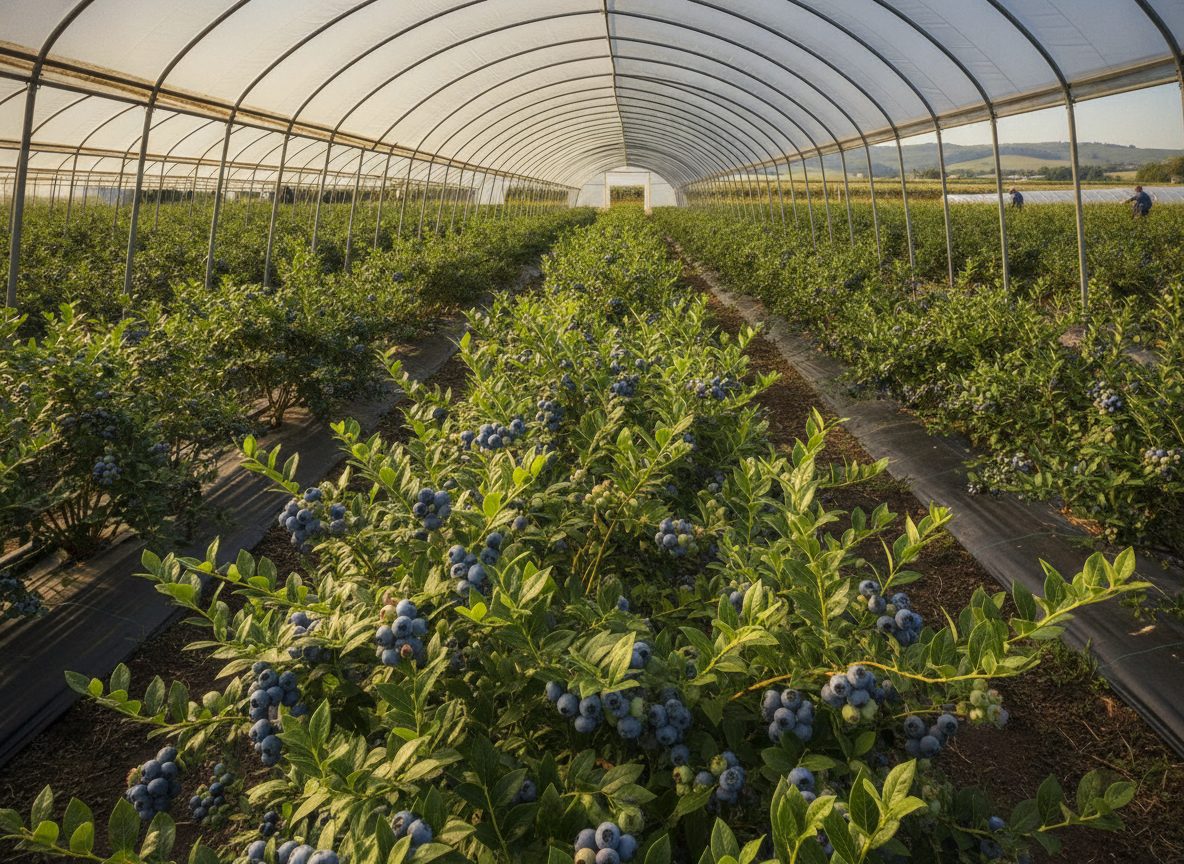
FIG. 02 - SEASON, EXTENDED UNDER TUNNELS
01
From Three Weeks to 52: The Season Extension Story
When most people over 40 grew up, blueberries were a fleeting summer indulgence, available for a handful of weeks, then gone until next year. That transformation to a 12-month grocery staple is one of the most deliberate and scientifically engineered feats in modern produce. It rests on three pillars: varietal genetics, geographic arbitrage, and cultivation technique.
The story begins with a single biological constraint. Wild and traditional northern highbush blueberries need up to 1,000 chilling hours, accumulated hours below 45°F, to break dormancy and flower. That locked production to cold-winter climates and a narrow harvest window. The entire season extension project is, at its heart, a campaign to shrink that number toward zero.
"Using a wild Florida native called Vaccinium darrowii, breeders reduced chilling requirements from 1,000 hours all the way to zero, unlocking tropical and subtropical climates that had never grown a blueberry commercially."
1908
First Domestication
Elizabeth White and USDA botanist Frederick Coville successfully domesticate northern highbush blueberries in New Jersey, cold-climate fruit, 800–1,000 chill hours required.
1950s
The Florida Breakthrough
University of Florida breeders George Darrow and Ralph Sharpe cross northern highbush with native Vaccinium darrowii. This creates the "southern highbush" type, low-chill, adaptable to warm climates. A wild Florida plant (accession "Florida 4B") becomes the genetic keystone of the modern global blueberry industry.
1978
Fall Creek Founded
Dave and Barbara Brazelton found Fall Creek Farm & Nursery in Oregon, which grows into the world's leading blueberry genetics and nursery company, eventually distributing 40+ million plants annually across 100+ varieties.
1990s
Southern Hemisphere Enters
Chile and South Africa begin commercial export of counter-seasonal blueberries to North American and European markets, the first sign of a true year-round supply chain. When northern hemisphere winters arrive, southern hemisphere summer fills the gap.
2000s
Peru & Mexico Enter
Low-chill southern highbush varieties reach the high Andes. Peru's coastal desert + high-altitude river valleys prove ideal. "Evergreening" technique, controlling defoliation by pruning timing, lets growers dial harvest windows to almost any month of the year.
2010s
Morocco, Spain, Zimbabwe
Mediterranean and sub-Saharan Africa regions enter export production with low-chill varieties, filling the European spring window. Private genetics companies accelerate breeding cycles using genomic selection, cutting cultivar development from 12–15 years to faster timelines.
2021–25
Peru as Year-Round Supplier
Peru becomes the world's leading exporter, using a "flattened curve" strategy, diverse low-chill varieties and staggered pruning schedules, to supply blueberries across all 12 months, not just the Oct–Nov peak. The 2024/25 season hits a record 327,000 tonnes, valued over $2 billion.
The "evergreen" system is particularly clever: southern highbush varieties with 0–400 chill requirements can be forced into dormancy at will through managed pruning, then the 5–8 month countdown to harvest begins. A grower targeting a May delivery prunes in January. This technique, combined with geographic spread across hemispheres, eliminated the seasonal cliff entirely.
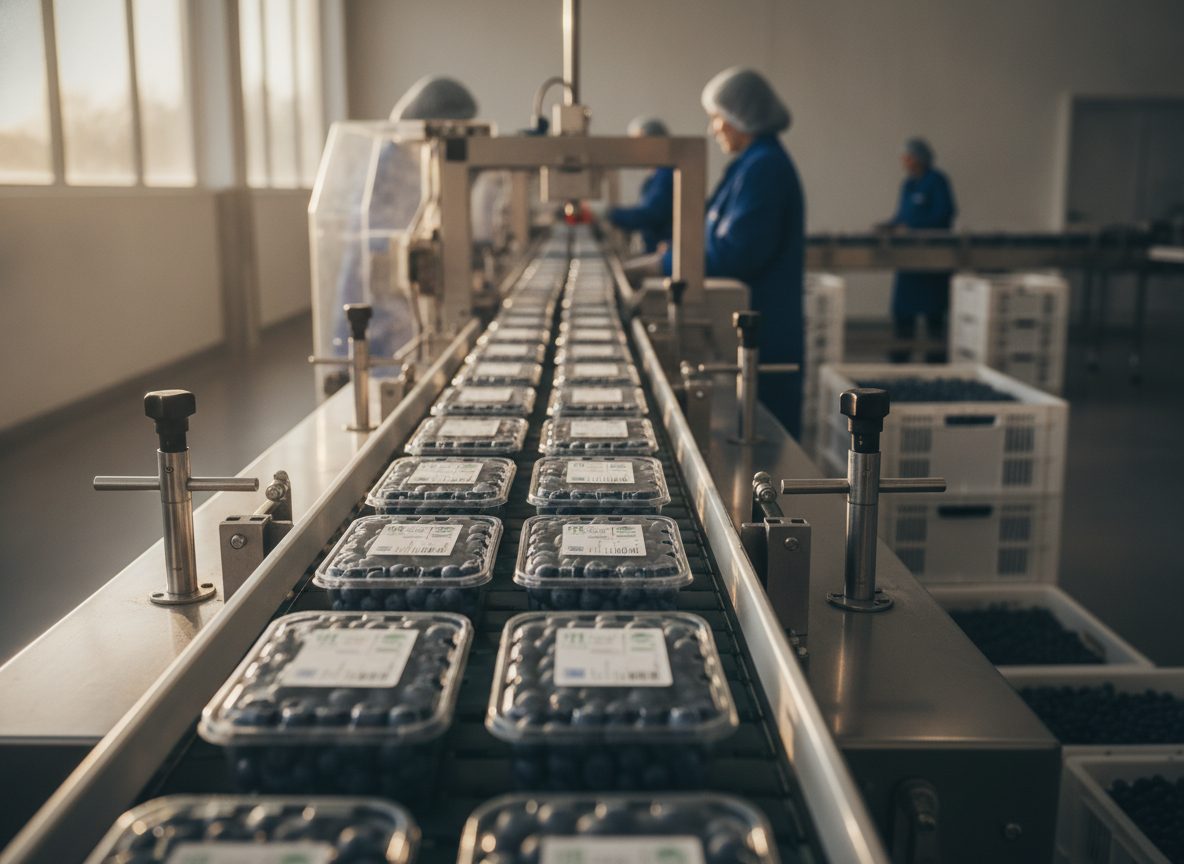
FIG. 03 - THE PACKING LINE
02
Global Import Volumes by Country
Global production increased from roughly 151,000 tonnes in 2001 to over 2 million tonnes in 2024, a 12× expansion in two decades. Total import trade reached 822,917 tonnes in 2023, with the US and Netherlands alone accounting for 48% of all imports (the Netherlands acting as the European redistribution hub).
Global Blueberry Production, 000' Tonnes
2001
151K
2010
~440K
2019
~940K
2020
1.08M
2021
1.24M
2022
1.44M
2023
1.78M
2024
2.0M+
Source: International Blueberry Organization (IBO) / Fluctuante, 2024
Country
2021 (000' T)
2022 (000' T)
2023 (000' T)
YoY Change
Share of Global
Volume
🇺🇸 United States
259
347
307
▼ 11.5%
37.3%
🇳🇱 Netherlands (hub)
110
127
88
▼ 30.7%
10.7%
🇩🇪 Germany
68
77
65
▼ 15.6%
7.9%
🇨🇦 Canada
55
58
59
▲ 1.7%
7.2%
🇬🇧 United Kingdom
50
55
58
▲ 5.5%
7.0%
🇫🇷 France
32
38
34
▼ 10.5%
4.1%
🇰🇷 South Korea
22
26
28
▲ 7.7%
3.4%
🌍 Rest of World
,
,
~184
,
22.4%
Source: IBO / Fluctuante 2024. 2023 total imports: 822,917 tonnes. US drop vs 2022 partly reflects demand normalization post-pandemic and El Niño supply disruptions.
Top Blueberry Exporters, 2023 (000' Tonnes)
🇵🇪 Peru
207,000 T (28%)
🇨🇱 Chile
83,000 T
🇨🇦 Canada
82,000 T
🇪🇸 Spain
71,000 T
🇺🇸 United States
58,000 T
🇲🇦 Morocco
~45,000 T est.
🇿🇦 South Africa
21,000 T
Source: IBO / Blueberries Consulting 2024. Morocco figure approximate based on 2024/25 season data.
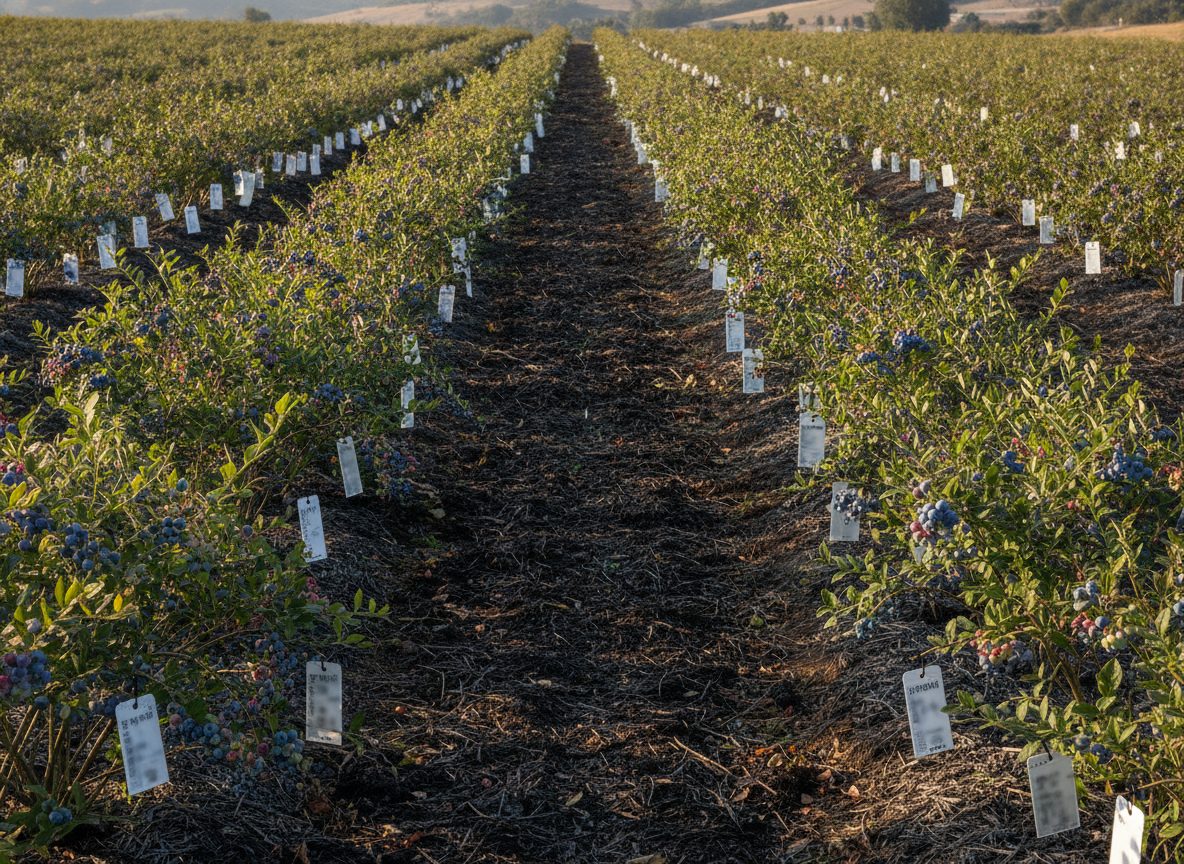
FIG. 04 - BRED IN THE TRIAL ROWS
03
The Genetics Companies Reshaping the Industry
Blueberry genetics has evolved from university breeding programs into a commercially competitive, IP-driven industry with private companies licensing proprietary varieties globally, a model more familiar to grain seed markets than fresh produce. Royalty structures, plant patents, and exclusive licensing agreements now define who can grow what, and where.
Traditional cultivar development takes 12–15 years from initial cross to commercial release. The push to compress this timeline using genomic selection and marker-assisted breeding is a defining competitive battleground.
Fall Creek
🇺🇸 Oregon, USA · Est. 1978
The undisputed market leader. Delivers 40+ million plants annually across 100+ varieties to growers in the Americas, Europe, Africa, and Asia. Operates wholly-owned nurseries in the US, Mexico, Peru, Spain, the Netherlands, and South Africa. Runs three global R&D facilities spanning all chill zones, conducting thousands of consumer taste evaluations. Their SEKOYA® platform now produces in 30+ countries and is on track to become one of Peru's top exported varieties.
Market Leader · Private
Hortifrut / Berry Blue
🇨🇱 Chile · Est. ~2010
Created through a joint venture between Hortifrut and Michigan Blueberry Growers (MBG), Berry Blue is a conventional cross-breeding program (non-GMO) with assessment stations in the USA, Chile, Peru, Mexico, and China. Their "Hortifrut Genetica" program explicitly targets year-round market supply and extends post-harvest shelf life to reach distant markets, a core requirement for global trade economics.
Vertically Integrated · Public (HF)
Planasa
🇪🇸 Spain · Est. 1980s
The world's largest nursery for strawberries, raspberries, and blueberries, producing ~1 billion plants annually across Spain, Poland, Morocco, Romania, China, Peru, Mexico, and the USA. Acquired 100% by the EW Group (German agri-giant) in 2023. Key blueberry varieties include Blue Manila, Blue Malibu, Blue Maldiva. Operates through a separate licensing model with commercial growers, providing regional exclusivity for premium varieties.
EW Group Subsidiary · Global Scale
OZblu
🇦🇺 Australia · Est. late 1980s
Founded by David and Leasa Mazzardis, who began their breeding journey with UF/IFAS professor Dr. Wayne Sherman in 1987. OZblu's proprietary varieties under Nature Select have become commercially planted in Florida, and the company is known for flavor-forward genetics that prioritize consumer eating quality alongside grower economics. A notable example of a small private program with outsized variety impact.
Private · Flavor-Focused
University of Florida IFAS
🇺🇸 Gainesville, FL · Est. 1950s
The foundational public breeding program. An estimated 95% of Florida's commercial production comes from UF-developed cultivars. Their 60+ year program, starting with the historic V. darrowii crosses, created the entire southern highbush category, which unlocked global production in warm climates. Pioneering work in genomic selection is now accelerating breeding cycles that previously took 12 years. Still licensing varieties globally and training the next generation of breeders.
Public University · Foundational
California Berry Genetics
🇺🇸 California, USA · Est. recent
A newer entrant, partnering with UGA horticulturist Scott NeSmith to develop high-yield, mechanically harvestable varieties. Their "Duchess" series (Early, Sweet, Blue) targets fresh market growers and focuses on extra-large berry size, thick skin for machine harvest, and crunchy texture to meet premium retail specifications. Five new commercial varieties were released in late 2024.
Emerging · UGA Partnership
⚖️
IP Lock-In: The Seed Patent Model Comes to Produce
Proprietary blueberry genetics now operate like seed patents in row crops. Growers must license specific varieties, pay ongoing royalties per plant, and in some cases sign exclusivity agreements that tie them to a single genetics company. Fall Creek's "Collection" platform explicitly provides tiered access: subscription to current varieties plus pipeline access to unreleased genetics. This is creating first-mover advantages for large commercial operations and potentially marginalizing smaller growers who cannot afford premium licensing fees. The consolidation of IP into a handful of private companies, particularly following Planasa's 2023 acquisition by EW Group, raises questions about long-term diversity of the genetics supply chain.
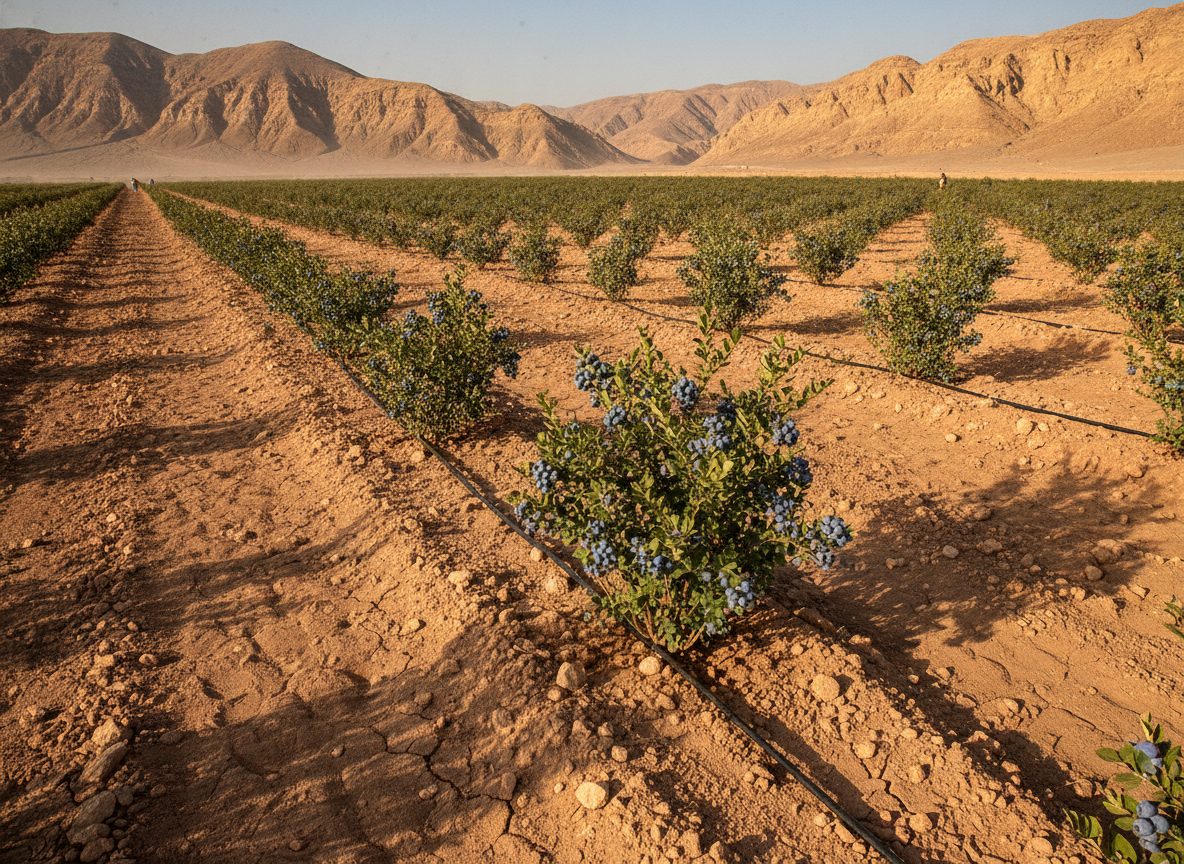
FIG. 05 - GROWN IN THE DESERT
04
The Environmental Cost of Year-Round Blueberries
The industrialization of blueberry supply has concentrated production in regions that are climatically convenient but hydrologically stressed. The three biggest environmental fault lines are water extraction in arid export zones, carbon footprint from long cold-chain logistics, and land conversion driven by demand expansion.
💧
Aquifer Depletion, Peru (Ica Valley)
Groundwater abstraction in the Ica-Villacuri aquifer reached 286 million m³ annually by 2017, far exceeding sustainable recharge rates. A state of emergency has been declared. Small farmers report that water tables that once sat at 5 meters now require drilling to 100 meters. Large-scale agro-exporters (blueberries, avocados, grapes) account for 81% of the groundwater footprint, while using very little surface water.
🏜️
Morocco Water Crisis, Competing with Drinking Water
Morocco's agricultural sector uses up to 80% of national water consumption. In the key berry production zone around Agadir, water scarcity has escalated to the point where agricultural irrigation directly competes with municipal potable water supply. Aquifers have dropped dramatically, and in some zones have been degraded by seawater intrusion and nitrate pollution from fertilizers. Government projections suggest 80% of water resources could be lost by 2045 at current consumption rates.
✈️
Carbon Footprint of Cold-Chain Global Trade
Year-round supply requires continuous refrigerated air and sea freight. Peruvian blueberries travel 7,000–10,000 km to reach US or European consumers. Air freight (used for premium early-season product) carries a carbon intensity 50× higher than sea. The industry has expanded the growing window, but also the supply chain length. Consumer demand for out-of-season "fresh" produce drives emissions that local or seasonal consumption would not.
🌳
Land Conversion & Monoculture Risk
Global planted area grew from 201,000 hectares (2019) to 267,000 hectares (2023), a 33% expansion in four years. In Peru, Chile, Morocco, and emerging African producers, this expansion often comes at the cost of native scrubland and previous food crop land. Heavy reliance on narrow proprietary genetic pools also raises biodiversity concerns: a pathogen adapted to the dominant varieties could cause systemic failures across multiple continents simultaneously.
🌱
Lower Water Use Than Competing Crops
Relative to other export crops, blueberries are comparatively water-efficient, consuming 7,000–8,000 m³ per hectare annually, versus 12,000 m³ for citrus, table grapes, or avocados. This is frequently cited by industry to defend expansion in water-stressed regions, though critics note that efficiency arguments don't resolve absolute scarcity when total planted area grows.
📡
Precision Irrigation Adoption
Leading producers in Morocco, Peru, and Chile are investing in drip irrigation, satellite moisture monitoring, and sensor-based fertigation systems. Morocco's Generation Green 2020–2030 strategy explicitly promotes these technologies to reduce water consumption. Some operations have reduced irrigation water use by 20–30% through precision systems, though adoption is uneven and concentrated among large-scale exporters.
Country Environmental Stress Indicators
🇵🇪
Peru
World's #1 Exporter
Ica Valley aquifer in declared emergency. Groundwater tables dropped from 5m to 100m depth. 68% of annual groundwater use exceeds aquifer renewability. Receives only 10mm of rainfall per year, entirely dependent on Andean glacier melt and groundwater.
🇲🇦
Morocco
#4 Global Exporter
Agriculture accounts for 80% of national water use. Agadir region faces direct competition between irrigation and drinking water. Aquifers degraded by seawater intrusion. 2024: additional 1,500 ha planted despite acknowledged scarcity.
🇨🇱
Chile
#2 Global Exporter
Mediterranean-climate orchards suffering a 10-year mega-drought. Blueberries require intensive drip irrigation. High energy costs for pumping have eroded competitiveness. Production in some regions fell as water became economically prohibitive.
🇪🇸
Spain
EU's Largest Producer
Huelva region (primary growing area) has faced EU scrutiny over illegal water extraction. Semi-arid climate increasingly challenged by drought and heat waves. Some production shifting north to Poland and other cooler regions.
"Before, it was enough to dig five meters, but now you have to go down to 100 meters to find water.", Local smallholder farmer, Ica Valley, Peru. Meanwhile, the same valley has expanded blueberry and avocado exports to a record $9.2 billion in 2024.
The core tension is one of virtual water trade: wealthy importing nations like the US, UK, and the Netherlands are effectively exporting their water stress to places like the Atacama Desert coast or the Moroccan hinterland. The countries bearing the environmental cost are not the ones consuming the fruit, and their regulatory capacity to enforce sustainable extraction is generally weaker than the commercial pressure to expand.
Peru's 2023-24 season saw export volumes collapse by 40%+ due to heat stress from El Niño, a preview of what climate volatility could do to supply chains built on increasingly fragile ecological foundations. The industry responded not by pulling back from stressed regions, but by accelerating the development of heat-tolerant varieties.
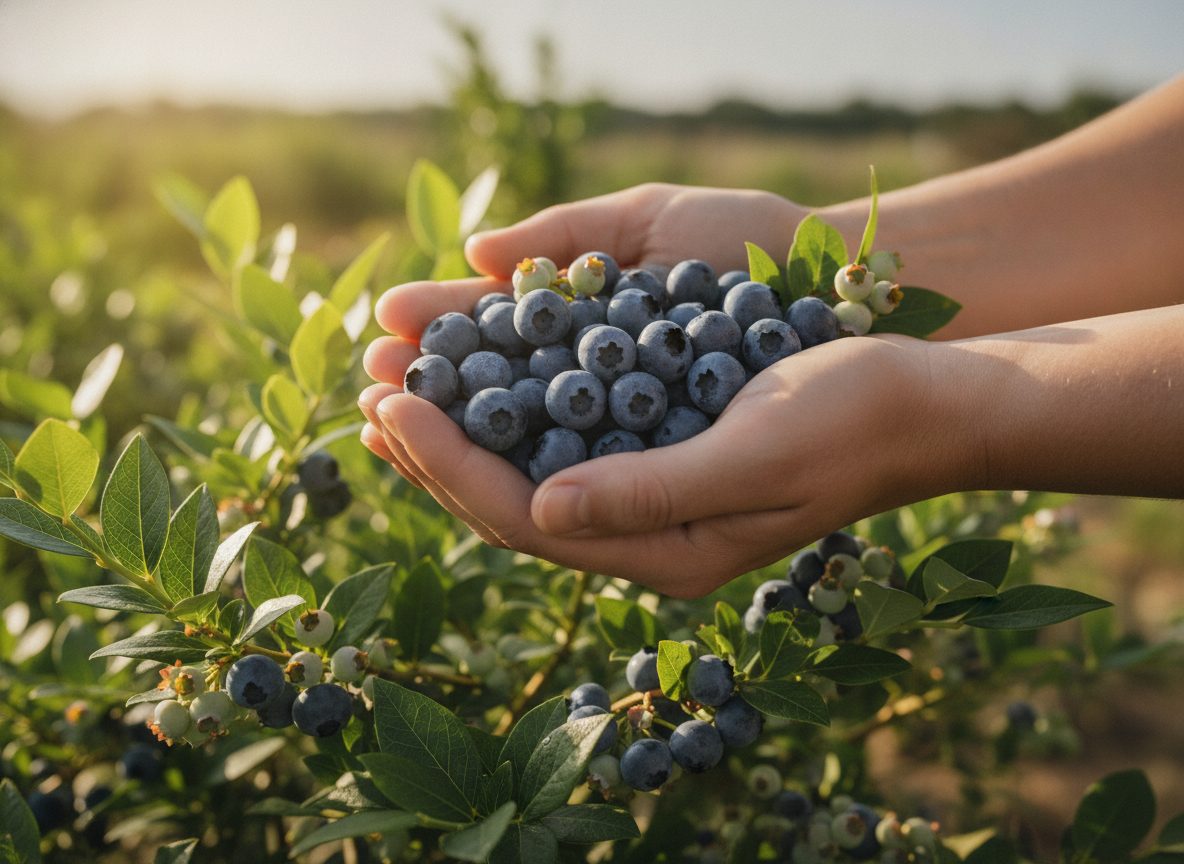
FIG. 06 - PICKED BY HAND
05
Outlook: What Comes Next
🧬
Genomic Selection Accelerates
The shift from 12-year phenotypic selection to 3–5 year genomic-assisted breeding will dramatically increase the pace of new variety releases. Companies like Fall Creek are investing heavily in this. Expect an explosion of branded, patented varieties competing in a market that currently over-supplies basic commercial fruit.
🌍
Africa Emerges as the New Frontier
Zimbabwe is the 2025 "breakout star", low-chill varieties, zero-tariff access to China, and a stable climate without the water constraints of Morocco or Peru. Kenya, Zambia, and Central Africa are watching closely. This mirrors exactly how Peru emerged in the early 2000s.
📉
Price Pressure Intensifies
Global production has been growing at 10%+ annually. Import prices have shown a mild downward trend since 2018. The industry faces a classic commodity trap: the same breeding success that created year-round supply now creates structural oversupply. Profitability is migrating toward proprietary branded varieties and away from generic commercial fruit.
🌡️
Climate Vulnerability
The industry's reliance on a handful of Southern Hemisphere export nations creates systemic risk. El Niño 2023-24 demonstrated how a single weather event can collapse Peruvian supply and spike global prices. The genetics response, more heat-tolerant varieties, addresses symptoms but not the underlying dependency on water-stressed geographies.